What grows on a north-facing balcony
A north-facing balcony gets under 3 hours of direct sun a day, so the plants that do best there are the ones that like shade: hosta, English ivy, begonia, impatiens, fern and fuchsia. Sun lovers like tomatoes, chili and lavender struggle. That's what Balcony Plants (balconyplants.co) picks for a north-facing balcony in a typical temperate city, and the list below shows why.
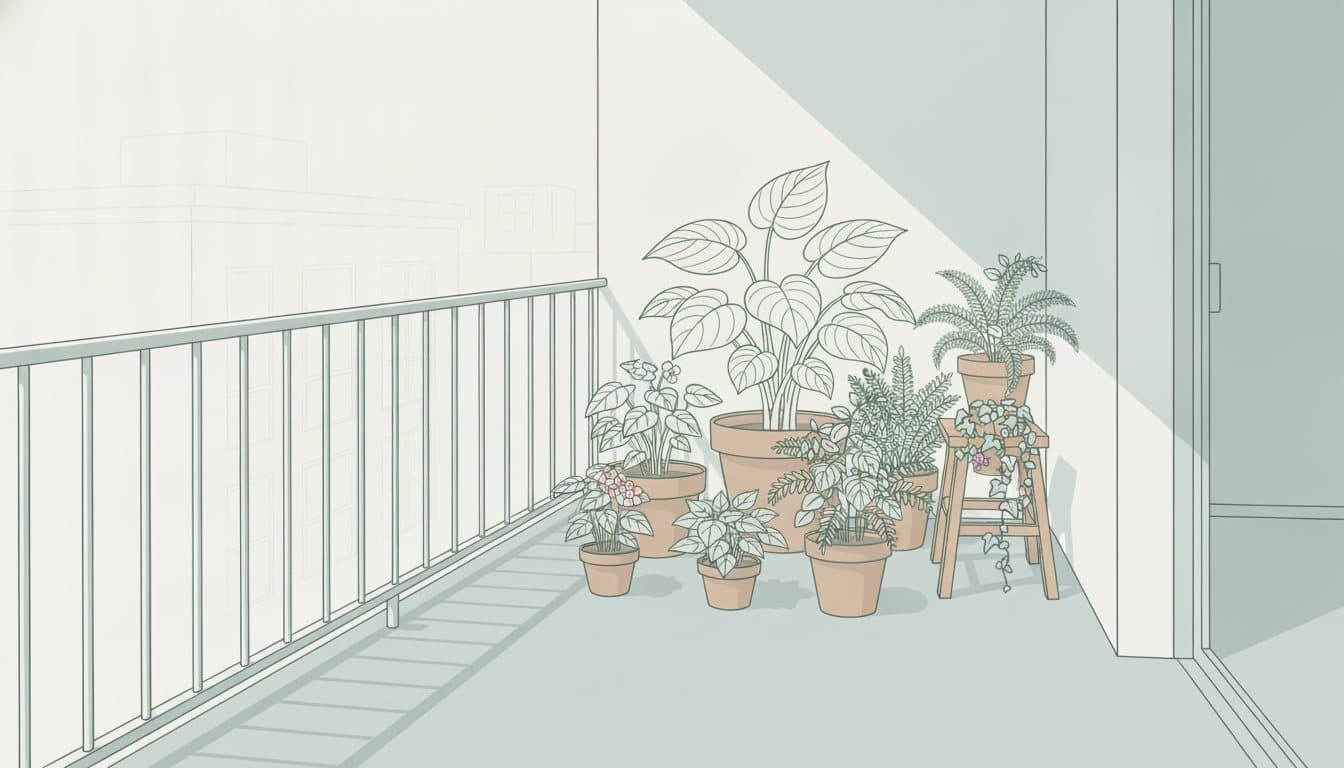
What thrives here
 HostaA classic pick for a shady balcony.Against the wall
 English ivyRight at home in the shade here.Against the wall
 BegoniaSuits the shade, but grow it as a summer plant, or bring it in over winter.Against the wall
 ImpatiensShade keeps its leaves lush and unscorched.Against the wall
 FernOne of the few that enjoys this shady spot.Against the wall
 FuchsiaMade for a spot this shady, but expect to fuss over it in a heatwave.Against the wall
Picked for a typical temperate city. Your city changes the list.
Tempted, but skip these here
 Tomato
 Chili
Chili Eggplant
 Blueberry
They need strong sun to flower or fruit, and this spot is too dim.
 Rosemary
 Lavender
 Thyme
Thyme Geranium
 Petunia
Full-sun plants: they grow long and thin here and barely flower.
A stretch facing due north: they'll grow, just thinner and slower, and they're much happier facing north-east or north-west.
 Lettuce
 Spinach
 Mint
Mint Parsley
 Chives
On a north-facing balcony the wall is the best spot you have: shadiest by day, warmest and calmest at night.
The free plant picker does this for your city, your floor and your wind.
Watch the cold nights
With so little sun to warm the pots by day, a north-facing balcony has no head start on a cold night. Move the tender ones (begonia, fuchsia, impatiens) against the wall or inside when frost is forecast.
More in the frost guide, and why your balcony runs differently from the forecast in balcony microclimate.
FAQ
What plants grow on a north-facing balcony?
Shade plants do best: hosta, English ivy, begonia, impatiens, fern and fuchsia. A north-facing balcony gets under 3 hours of direct sun, so sun lovers like tomatoes, chili, rosemary and lavender grow long and thin and rarely flower or fruit. Leafy greens and soft herbs will grow but stay thin facing due north; they do much better facing north-east or north-west.
What can I grow on a shady balcony?
More than people expect. Shade plants like hosta, ivy, ferns, begonias, impatiens and fuchsia thrive, and with a few hours of light, leafy crops and soft herbs like chard, kale, chives, parsley and lemon balm do well too. Skip anything grown for its fruit, like tomatoes, chili or eggplant: they need 6 or more hours of direct sun.
Can I grow tomatoes on a north-facing balcony?
Honestly, not well. Tomatoes need 6 or more hours of direct sun to set and ripen fruit, and a north-facing balcony gets under 3. You get a tall, pale plant and few tomatoes, if any, and facing north-east or north-west it's still a long shot. Leafy greens and herbs are a far better use of the pot.
What herbs grow on a shady balcony?
The soft, leafy ones. Chives, parsley, mint, coriander and lemon balm cope with a few hours of sun and keep giving you leaves, though facing due north they stay thinner. The woody Mediterranean herbs (rosemary, thyme, sage, oregano) need full sun and go thin and dry in shade. A simple rule: if you eat the leaf, it usually takes some shade; if the herb comes from a hot, dry hillside, it wants sun.
What flowers grow on a north-facing balcony?
Shade-tolerant ones: fuchsia, begonias and impatiens all flower with little direct sun, while ferns, hostas and ivy keep the space green. The classic sun lovers (geraniums, petunias, lavender) flower poorly here, so don't fight them.
A shade balcony, not a bad balcony
Pick the plants that like it there and a north-facing balcony stays green all season.